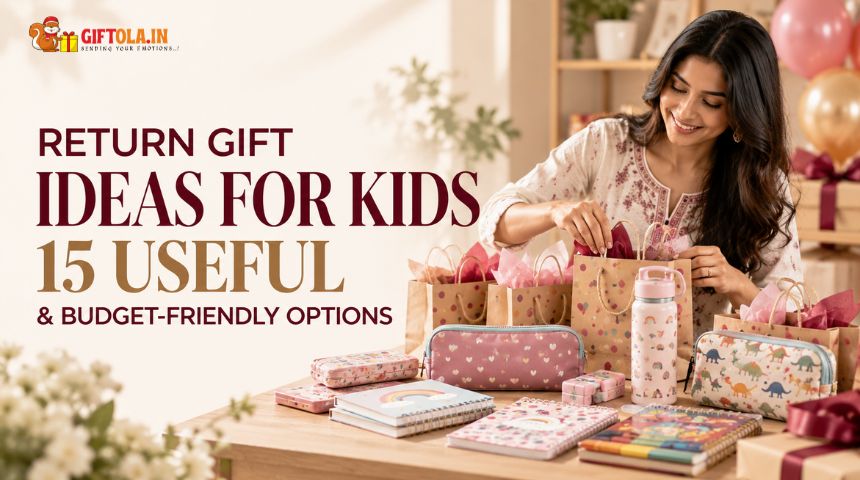
Return gift ideas for kids featuring 15 useful and budget-friendly gift options for birthdays and special occasions by Giftola.in.

Return Gift Ideas for Kids: 15 Useful & Budget-Friendly Options

Finding return gift ideas for kids can be surprisingly tricky. You want every child to feel included, but you also need gifts that fit the budget, work for the age group and are easy to distribute. A good return gift does not have to be expensive or elaborate. It should be safe for the intended age, practical or enjoyable, and thoughtfully presented.

Whether you are planning a birthday party, preschool celebration, classroom event or family gathering, this guide shares 15 flexible ideas, plus a simple way to choose quantities and budgets. Always verify product labels, age warnings and live availability before ordering.

How to Choose Return Gift Ideas for Kids

Start with the children rather than the packaging. Note the age range, number of recipients, setting, total budget and any restrictions communicated by parents or the school. A return gift for a three-year-old needs different considerations from one for a ten-year-old. For mixed-age groups, choose age-specific variants or an option suitable for the youngest child.

For younger children, avoid products with small detachable parts when age warnings prohibit them. Check any art materials, batteries, sharp edges or cords. If you are buying in bulk, request one sample and inspect the packaging before finalising the order.

15 Practical Return Gift Ideas for Kids

1. Colouring book and chunky crayons

A simple creative combination for younger children. Choose age-appropriate crayons and check non-toxic labelling and any small-part warnings.

2. Compact stationery pouch

Useful for school-going children who already carry pencils and erasers. Look for a working zipper and practical size.

3. Mini notebook or drawing pad

A versatile option for children who enjoy writing, doodling or collecting ideas. A blank pad works across many interests.

4. Pencil and eraser set

An easy-to-distribute everyday option. Avoid novelty erasers shaped like food for children likely to put objects in their mouths.

5. Reusable water bottle

A practical gift when material, cap design and cleaning instructions suit the child’s age. Confirm leakage and size rather than assuming every bottle is child-friendly.

6. Simple art activity kit

A paper-based activity pack can turn a return gift into an afternoon project. Check instructions and supervision requirements.

7. Story or picture book

Select by reading level and interest. Picture books work differently from independent-reading books, so age matters.

8. Bookmark and reading journal

An affordable combination for children who enjoy books, with room to note favourite stories.

9. Small organiser or zipper pouch

Useful for older children to store stationery or craft supplies. Verify closures and avoid dangling accessories for very young children.

10. Reusable lunch accessory

A compact, easy-clean item can be helpful when parents are comfortable with food-contact materials and hygiene requirements.

11. DIY greeting-card kit

Paper, stickers and simple card templates encourage creativity. Choose age-appropriate components.

12. Travel doodle notebook

A lightweight option for trips and waiting rooms. Pair with a suitable pencil rather than too many loose pieces.

13. Simple puzzle or matching activity

Choose a puzzle specifically labelled for the recipient’s age; piece size and difficulty vary widely.

14. Personalised name notebook

A modest personal touch can feel special. Double-check spellings and get permission before collecting children’s names.

15. One useful item with a handwritten thank-you note

A well-chosen notebook, pouch or creative item paired with a warm message can feel more considered than a large plastic-filled bag.

Return Gift Ideas for Kids by Age

Age group Possible direction Important check
3–5 years Picture books, chunky colouring supplies Small parts, supervision and age label
6–8 years Stationery, drawing pads, activity kits Material and component suitability
9–12 years Pouches, journals, reading accessories Interest, utility and durability
Mixed ages Different variants or youngest-age-safe choice Avoid one-size-fits-all assumptions

How Much Should You Budget?

Calculate your full budget before selecting a product: number of children × estimated gift cost, plus packaging, personalisation, delivery and a small buffer for extras. For example, 25 children at an illustrative ₹150 per gift gives ₹3,750 before any additional costs. This is a planning example, not a current Giftola product price.

Order a few extra units when the guest list may change. For a school event, ask whether individual packaging or name labels are actually needed; simpler packaging often saves time and waste.

Five Mistakes to Avoid

  • Buying without checking the youngest recipient’s age and warnings.
  • Choosing attractive packaging over an item children can use.
  • Assuming every product shown online is currently in stock.
  • Forgetting personalisation lead times and spelling checks.
  • Ordering the exact headcount with no allowance for changes.

Where to Find Return Gifts Online

Giftola lists return-gift products and related accessories, including stationery, pouches and small gifting items. Browse the live catalogue, check the individual product page and confirm quantities before placing a bulk order.

Explore Giftola’s current shop

Browse Giftola’s return-gift category

Read Giftola’s gifts-for-kids-by-age guide

Frequently Asked Questions

What are useful return gift ideas for kids?

Stationery, drawing supplies, books and age-appropriate pouches can be useful. The best choice depends on age and interests.

What are inexpensive birthday return gifts?

A notebook, pencil set, bookmark or simple paper activity can be budget-conscious without feeling disposable.

Are personalised return gifts a good idea?

Yes, when names are correct and the family is comfortable sharing them. Personalisation is optional, not necessary.

Can one return gift work for all ages?

Sometimes, but check suitability for the youngest recipient. Mixed-age groups often benefit from two variants.

How early should I order return gifts?

Allow time for stock confirmation, any personalisation, packing and delivery. Confirm timelines with the seller.

What safety checks matter for children’s gifts?

Read age warnings and instructions, assess small parts and sharp edges, and check whether adult supervision is required.

Final Thoughts

The best return gift ideas for kids balance enjoyment, everyday usefulness and thoughtful planning. Choose something appropriate for the child, keep the presentation simple and verify the details before ordering. A small, useful gift can leave a lasting impression.

For current products, explore Giftola’s return-gift collection and confirm age suitability, stock, packaging and bulk-order requirements directly before purchasing.
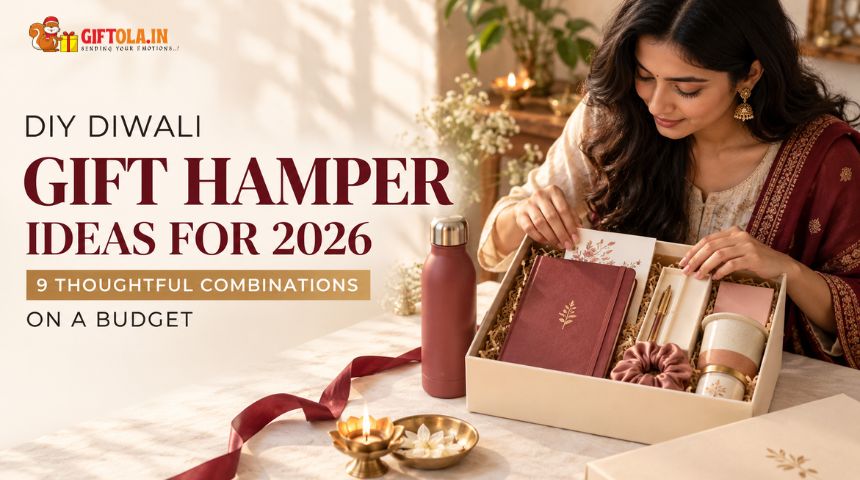
DIY Diwali gift hamper ideas for 2026 featuring a festive gift box with a notebook, bottle, mug, and decorative accessories on a budget.

DIY Diwali Gift Hamper Ideas for 2026: 9 Thoughtful Combinations on a Budget

Why DIY Diwali Gift Hamper Ideas Work in 2026

Many large gifting stores spotlight ready-made festive hampers, sweets and decor. A do-it-yourself approach offers something different: control over what goes inside. You can adjust the balance between personal, useful and celebratory items, keep packaging modest and add a short message that a pre-packed assortment may not capture.

A DIY hamper does not have to contain traditional Diwali sweets or lamps. Those can be lovely when you know they suit the recipient, but they are not necessary. A small gift that gets used regularly can be just as warm a gesture.

Before You Build: The 3-Part Gift Hamper Formula

A practical starting point is to choose one anchor item, one complementary item and one personal finishing touch. That is a planning framework, not a fixed rule. For example, a notebook can be the anchor; a pen or compact pouch can complement it; a handwritten card supplies the emotional detail.

Element Purpose Possible choices
Anchor Main reason to keep the gift Diary, bottle, practical accessory
Companion Helps the gift make sense Pens, small pouch, stationery
Personal touch Makes it feel intended for one person Handwritten greeting, simple colour choice

9 DIY Diwali Gift Hamper Ideas to Try

1. The Everyday Desk Hamper

For colleagues, students and anyone who makes lists. Pair an A5 diary with writing tools and a short note about a fresh start. Skip extra desk clutter; one useful notebook is stronger than several decorative items.

2. The Hydration & Routine Hamper

For a friend who commutes or has long workdays. Centre the gift on a reusable bottle and add a handwritten wellness wish. Review the bottle’s current specifications, care requirements and suitability before purchasing.

3. The Creative Little Moments Hamper

For an age-appropriate creative recipient. Combine drawing or colouring supplies with paper and a small organiser. For children, check all age labels and safety markings; gifts should suit the child rather than a broad “kids” label.

4. The Study-Buddy Hamper

For teenagers or college-going relatives. Pair a notebook with pens and a compact zipper pouch. Keep colour choices restrained or match the recipient’s favourite palette; avoid oversized novelty items that are hard to carry.

5. The Small Thank-You Hamper

For neighbours, teachers or hosts. Choose one modest, useful item such as a diary or small everyday accessory and present it with a sincere message. It is particularly effective when a full luxury hamper would feel disproportionate.

6. The Memory & Message Hamper

For a close friend or sibling. Use a photo frame or another memory-friendly item, but only add a personal photo if you have permission. Include a brief note about the specific memory; that often matters more than the quantity of items.

7. The Workday Essentials Hamper

For coworkers and team members. A notebook, small pouch or bottle can be combined into a practical bundle. Choose broadly useful products, avoid personal assumptions and keep any business branding subtle and appropriate.

8. The Family Activity Hamper

For households who enjoy screen-free time together. Build around paper-based creative supplies and a simple activity suggestion. Do not imply that a specific toy or product is safe for every age—check the label and supervise as necessary.

9. The Minimalist Diwali Hamper

For someone who prefers fewer possessions. Select one carefully chosen item, attractive reusable wrapping and a thoughtful greeting. Minimalist gifting works best when the item has a clear place in the recipient’s daily life.

How to Build a Budget Diwali Gift Hamper Without Guesswork

Set a total spending limit before browsing, then reserve room for packaging and delivery. Do not calculate the budget from the product prices alone. A box, ribbon, note card and shipping charge can materially change the final total, especially when buying for several recipients.

Step Practical question
Budget What is the full amount per recipient, including delivery?
Recipient What would this person actually use?
Item count Can two or three choices tell the story without filler?
Packing Can the contents travel safely and arrive neatly?
Final check Are stock, delivery date, care details and returns confirmed?

Illustrative planning example: If you have ₹500 in total, you might allocate roughly ₹350–₹400 to the main items and preserve the remainder for packaging or delivery. This is a budgeting example, not a live product-price claim or promised hamper price.

How to Personalise the Hamper Without Making It Complicated

Personalisation should feel specific, not forced. A useful line might be “For all the plans you have ahead this year” with a diary, or “For the everyday journeys ahead” with a water bottle. Check spellings before ordering customised items and confirm whether an item actually supports customisation; do not assume every Giftola product can be personalised.

Colour is another form of personalisation. Matching a pouch or wrapping paper to a recipient’s taste is often enough. Avoid including photos, names or workplace details in gifts without the recipient’s consent.

Where to Look for Giftola Products

Browse the Giftola shop for currently listed diaries, stationery, pouches, bottles and accessories. Use product listings to verify specifications, availability, delivery conditions and the final checkout price.

For small return-gift directions, explore Giftola return gifts through the site’s category navigation. For office gifting, start with the corporate products shown on Giftola’s home page rather than assuming that pre-packed festive hampers are available.

If you want more help choosing gifts by recipient, read the existing Giftola gifting articles for related guides. This article focuses specifically on assembling DIY combinations rather than ranking gifts by price.

How to Avoid Unnecessary Packaging and Waste

Thoughtful packaging can still look festive. Consider a reusable bag or box, paper filler kept to a minimum, or a fabric tie if it fits the gift. The goal is not to claim that one wrapping method is always environmentally superior; it is to avoid excess material that adds little value.

Buy the items first, then choose a container that fits them. Oversized boxes and decorative fillers can make an inexpensive hamper look larger without making it more meaningful. A snug, attractive presentation is often more effective.

What to Check Before Ordering Gifts Online

Before placing an order, confirm the seller information, item description, total price, delivery timeline, return or cancellation conditions, and whether customised products have different terms. India’s Department of Consumer Affairs publishes the Consumer Protection (E-Commerce) Rules, 2020 as an official reference for the online-shopping regulatory framework; it is not a substitute for checking a specific seller’s current policy.

Read the official Department of Consumer Affairs e-commerce rules page for the public government source.

Common DIY Diwali Hamper Mistakes to Avoid

  • Buying several unrelated items just to make the box look full.
  • Assuming all products are suitable for children or for every recipient.
  • Choosing packaging before confirming the size of the contents.
  • Promising delivery by a festival date without checking timelines.
  • Forgetting to account for delivery, tax or customisation charges.
  • Using unverified sustainability, material or safety claims.

60-Second DIY Diwali Hamper Checklist

  • I know who the gift is for and what they like.
  • The main item has a practical or emotional reason to be there.
  • Every extra item complements the first.
  • The total includes packaging and delivery.
  • I checked stock, specifications and any relevant age warnings.
  • The packaging fits the items securely.
  • A personal note completes the gift.

Frequently Asked Questions

What are good DIY Diwali gift hamper ideas on a budget?

Start with a useful anchor such as a notebook, bottle or simple accessory, add one complementary item and finish with a handwritten note. Use the full order cost, not just the product subtotal, to choose a realistic budget.

How many items should be in a Diwali gift hamper?

Two or three coherent items can be enough. The right number depends on the recipient, size, budget and occasion; more items do not automatically make a gift more thoughtful.

Can I make a Diwali hamper without sweets?

Yes. Everyday-use items, writing accessories, activity materials and personal keepsakes can make a meaningful festive gift when selected for the recipient.

What should I put in a Diwali hamper for colleagues?

Practical desk or commute essentials are generally versatile. Consider diaries, pouches or bottles, while checking workplace gifting guidelines and individual preferences.

Are DIY Diwali gift hamper ideas suitable for children?

They can be, but every individual item must be age-appropriate. Check warnings, small parts, materials and supervision requirements rather than assuming a generic hamper is child-safe.

Where can I find items for a DIY Diwali gift hamper?

Giftola’s online shop currently shows product categories including stationery, diaries, pouches, bottles and small accessories. Verify the live listing before planning the final hamper.

Final Thoughts: Make Every Item Count

The most effective DIY Diwali gift hamper ideas start with a person, not a packaging trend. Choose useful pieces that fit together, leave room for a personal message and keep your promises about pricing and delivery realistic. A thoughtful combination is easier to remember than a large box filled without purpose.

Explore the latest available gifts at Giftola and build your own Diwali combination around the people you want to celebrate.

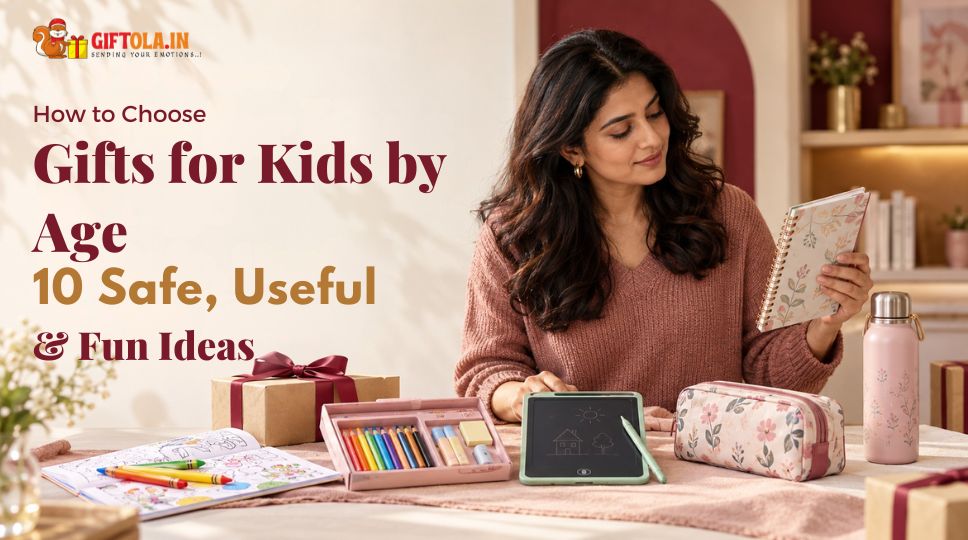
How to Choose Gifts for Kids by Age – 10 Safe, Useful and Fun Gift Ideas

How to Choose Gifts for Kids by Age: 10 Safe, Useful & Fun Ideas

Choosing gifts for kids by age is one of the easiest ways to make gifting more thoughtful. A present that delights a three-year-old may feel too simple for an eight-year-old, while something designed for older children may be frustrating—or inappropriate—for a younger child. The goal is not to find the biggest, brightest or most expensive gift. It is to choose something that fits the child’s stage, interests, abilities and everyday life.

Giftola’s current catalogue includes several child-friendly directions such as stationery kits, writing and colouring products, keychains, coin boxes, activity items and return-gift options. Rather than treating every product as suitable for every age, this guide shows how to think about age fit first and then shortlist the right kind of gift.Browse the current Giftola shop

Why Age Matters When Choosing Gifts for Kids

Children change quickly. Their motor skills, attention span, reading ability, independence and interests can shift significantly in only a few years.

A younger child may enjoy sensory, matching or simple creative activities, while an older child may prefer more independent making, writing, collecting, organising or personal accessories.

Age is not the only factor. Interests, maturity and individual abilities matter too. Treat age guidance as a starting point rather than a substitute for knowing the child.

Safety matters especially when the gift is a toy or play product. The Bureau of Indian Standards (BIS) maintains Indian toy-safety standards, including requirements addressing mechanical and physical hazards, flammability and certain chemical risks. For toys sold in India, checking applicable BIS marking and age guidance is more useful than relying only on how attractive the packaging looks. Read BIS guidance on toy safety

A Quick Guide to Gifts for Kids by Age

Age / stageWhat often worksUseful gift directionsWhat to check
2–4 yearsSimple, hands-on, easy to understandLarge-format creative items, simple activity gifts, age-suitable play productsSmall parts, sharp edges, age marking, supervision needs
4–6 yearsCreative play and early school-use itemsColouring, simple stationery, reusable drawing/writing activitiesComplexity, mess level, choking risk, instructions
6–9 yearsUseful + fun gifts with more independenceStationery kits, art supplies, organisers, coin boxes, simple accessoriesDurability, practical use, age appropriateness
9–12 yearsMore personal choice and hobby-led giftsNotebooks, accessories, watches, creative kits, room/desk itemsStyle preference, usefulness, quality
12+ yearsIdentity, utility and personal tastePractical accessories, journals, tech-adjacent non-restricted items, personalised giftsTaste, privacy, usefulness, quality

10 Smart Ways to Choose the Right Gift

1. Start With the Child’s Stage, Not Just Their Birthday

A birthday number is helpful, but development and independence matter more. Ask what the child can comfortably use without constant adult help. For younger children, simplicity usually wins. For older children, gifts that give them more ownership—writing, organising, creating, collecting or choosing how to use the item—often feel more satisfying.

2. Choose Something They Can Actually Use

A gift does not become thoughtful simply because it looks cute. Useful gifts often stay in a child’s routine longer. Think about school, art time, travel, playtime, hobbies or their study desk. A stationery kit, reusable writing item, pouch or organiser can feel more valuable than an object that is exciting for ten minutes and then forgotten.

3. Match Complexity to Attention Span

A product can be safe and still be frustrating if it demands skills the child has not developed yet. For younger children, look for clear, short activities and immediate feedback. As children get older, longer projects, multi-step kits and tools that reward patience can become more appropriate.

4. For Toys, Check Safety Information Before Style

If the gift is a toy, activity toy or play product, look beyond colour and characters. Check age recommendations, warnings, small-part information and applicable certification. BIS toy-safety standards cover areas such as mechanical and physical hazards, flammability and migration of certain elements. The Department of Consumer Affairs also maintains consumer information on toys and safety regulations.

5. Use Creativity as a Filter

Creative gifts can work across several age groups when the difficulty is right. Colouring materials, drawing tools, stationery and activity items can turn a present into something the child actively does rather than simply owns. Giftola currently carries child-oriented creative and stationery products alongside return-gift options, so this can be a useful category to browse after deciding the age range.

6. Think About Repeat Use

Ask one practical question: can the child use this more than once? Repeat-use gifts—such as writing tools, pouches, organisers, art materials, bottles, diaries or desk items—can become part of everyday routines. That usually creates more long-term value than a novelty chosen only because it is trending.

7. For Group Gifting, Keep the Age Range Tight

Return gifts become harder when a party includes children from very different age groups. Instead of forcing one product to work for everyone, split the list into two age bands where possible—for example, preschoolers and school-age children. This makes it easier to choose gifts that are safer, more useful and more exciting for each group.

8. Personalise Carefully

Names, colours or a short message can make a child’s gift feel special, but personalisation should not make the product difficult to exchange or reuse. For group events, check every spelling before production. For older children, choose personalisation that feels age-appropriate rather than overly childish.

9. Avoid Buying Only by Price

Budget matters, especially for return gifts, but the lowest price should not be the only filter. Compare age fit, practical use, quality, presentation and safety. A simple, well-chosen item can feel more thoughtful than a larger bundle of random low-use products.

10. Let Interests Break the Tie

Once you have two or three age-appropriate options, use the child’s interests to decide. Do they draw? Write? Collect small things? Enjoy school supplies? Like practical accessories? Personal preference is what turns an age-suitable gift into a gift that feels genuinely chosen for them.

For parents and buyers in India who want an official consumer reference, the Department of Consumer Affairs page on Toys and Safety Regulations is a useful government source for understanding the regulatory context around toy safety.

Gift Directions by Age Group
Ages 2–4: Keep It Simple and Supervised

Choose large, easy-to-handle, age-marked products and simple creative activities. Avoid anything with small detachable parts unless the age guidance clearly supports it. At this stage, a gift should be intuitive enough that the child can understand what to do with minimal explanation.

Ages 4–6: Creativity Meets Early Independence

This is a useful stage for simple art, colouring and stationery-led gifts. Children are beginning to enjoy items that feel like “their own” school or creative supplies. Keep instructions short and make sure the product still suits their age and skill level.

Ages 6–9: Useful Gifts Become More Exciting

School-age children often appreciate gifts they can use independently—stationery kits, organisers, coin boxes, art supplies, writing tools or small accessories. Practical does not have to mean boring; colour, character and presentation can still make the gift feel celebratory.

Ages 9–12: Give Them More Choice

At this stage, personal taste becomes more important. Instead of choosing only by age, pay attention to colours, hobbies, school routines and what the child already owns. A journal, useful accessory, creative kit or desk item may feel more grown-up while still being fun.

Ages 12+: Move Toward Utility and Identity

Older children and teens often respond better to gifts that feel useful, personal or style-aware rather than overtly childish. Consider journals, practical everyday accessories, personalised items and products tied to their interests. When in doubt, simple and usable usually ages better than novelty.

A 60-Second Checklist Before You Buy

  • Is the gift suitable for the child’s age and abilities?
  • If it is a toy, does it carry appropriate safety and age information?
  • Are there small parts, sharp edges, magnets, cords or other features that need attention?
  • Can the child use the gift more than once?
  • Does it match a real interest or routine?
  • Is the quality appropriate for the way a child will use it?
  • For return gifts, can it be distributed easily and consistently?
  • For personalised gifts, are names and details checked before ordering?

Common Mistakes to Avoid

Choosing a gift only because it is trending: A viral product is not automatically right for a child’s age, interest or routine.

Ignoring age guidance on toys: Age labels and warnings are there for a reason. Treat them as part of the buying decision, not packaging clutter.

Buying the same return gift for toddlers and tweens: A wide age spread usually needs more than one gift direction.

Over-personalising: Too many names, photos or decorative details can make an otherwise useful gift less versatile.

Forgetting how the gift will be used: A good gift has a clear place in the child’s life: play, creativity, school, organisation, travel or memory-making.

Where Giftola Fits In

Giftola’s current shop includes a mix of birthday gifts, return gifts, stationery-led products, activity items, keychains, coin boxes, writing products and other affordable gifting options. The best way to use the catalogue is to start with age, safety and usefulness—then browse for the style, colour or presentation that makes the gift feel special.Explore Giftola’s current shop

If you are buying for a children’s party, Giftola also has existing editorial guidance on return gifts. Use that as an idea source, but still apply the age and safety filters in this guide before ordering for a group.Read Giftola’s kids’ return-gift article

Frequently Asked Questions

What are good gifts for kids by age?

Good gifts for kids by age are products that match the child’s developmental stage, interests and ability to use the item safely. Younger children usually benefit from simpler hands-on gifts, while older children often enjoy more independent, practical or hobby-led options.

How do I choose a safe toy gift in India?

Check the age recommendation, warnings, small-part information and applicable BIS marking/certification. For specific regulatory questions, refer to official BIS and Department of Consumer Affairs guidance.

What are useful gifts for school-age children?

Useful directions can include stationery, writing tools, art materials, pouches, organisers, coin boxes, bottles, journals and age-appropriate accessories.

Should return gifts be the same for every child?

They can be, if the children are in a similar age group and the product suits all of them. If the age range is wide, separating the gifts into two age bands can produce a better result.

Are personalised gifts suitable for children?

Yes, when the personalisation is age-appropriate and accurate. Names, colours or short messages can add meaning, but the core product should still be useful and appropriate.

Where can I browse gift ideas for kids online?

Giftola’s shop currently includes birthday and return-gift products, stationery-led items, creative products and practical everyday gifts. Availability can change, so review the live product page before ordering.

Final Thought: Age First, Gift Second

The simplest way to choose gifts for kids by age is to reverse the usual shopping process. Do not begin with the product. Begin with the child: their age, abilities, interests and routine. Then check safety where relevant, shortlist gifts they can genuinely use, and let colour, character and presentation add the fun. The result is a gift that feels exciting on the day—and still makes sense after the wrapping paper is gone.

Official Sources & Internal Links